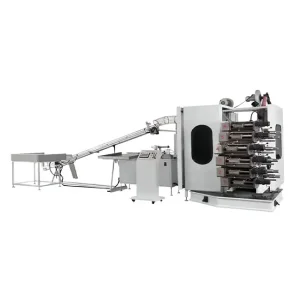
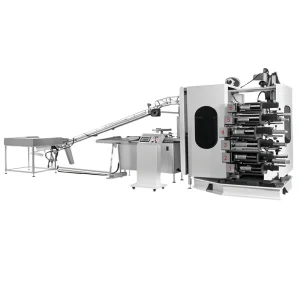
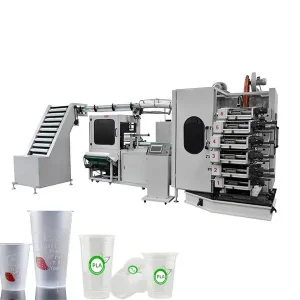
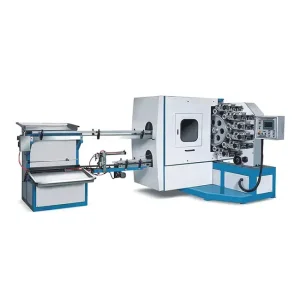
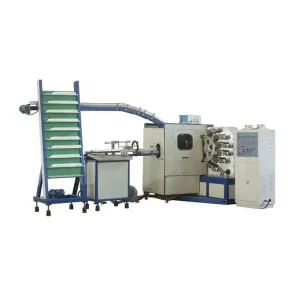
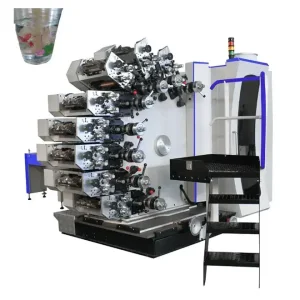
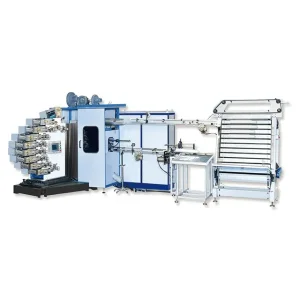
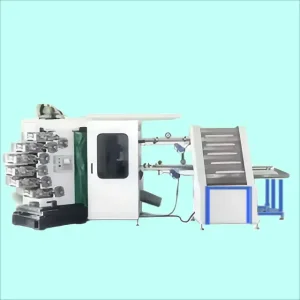
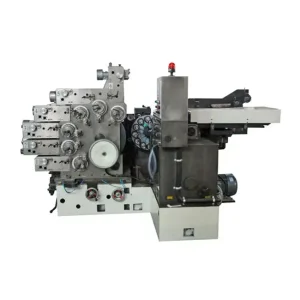
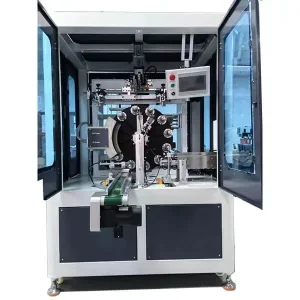
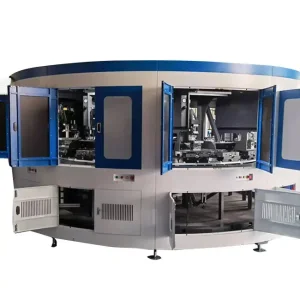
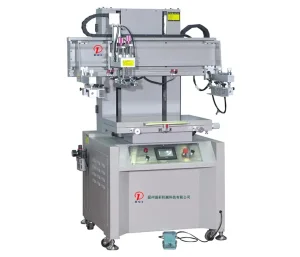
Premium 6-to-8 color dry offset and screen systems built to satisfy strict Japanese food packaging manufacturing standards.
The Greater Tokyo Area, comprising Tokyo, Kanagawa, Chiba, and Saitama, represents one of the most concentrated convenience store (konbini) and fast-food retail networks globally. Brands such as Seven-Eleven, Lawson, and FamilyMart drive massive regional demand for thin-walled plastic cups, beverage containers, and paper-based eco-packaging. As a result, commercial printing facilities situated in industrial zones surrounding Tokyo require exceptionally high-efficiency, high-volume manufacturing solutions.
Historically, Japanese plants have favored ultra-customized local machinery. However, modern commercial demands are forcing a shift. The modern Tokyo food service segment expects daily batch changes, multi-color high-definition graphics, and strict adhesion to safety regulations (such as Japan’s Food Sanitation Act and METI compliance). Modern printing lines must be capable of processing diverse materials, including traditional polypropylene (PP), polyethylene terephthalate (PET), and bio-based polylactic acid (PLA).
Tokyo Metropolitan Government directives are aggressively pushing for circular economy models. Consequently, cup manufacturing factories must transition from simple polymers to hybrid paperboard, post-consumer recycled (rPET), and bioplastics. Printing on these diverse substrates requires highly adaptive ink-transfer systems. Advanced dry offset and servo-driven screen printing machines provide the control required to adjust registration pressure, corona-discharge pre-treatment intensity, and UV-curing cycles to accommodate variable thermal and surface properties of bio-substrates without warping or printing defects.
Combining technology-intensive manufacturing, strict international quality control systems, and localized servicing.
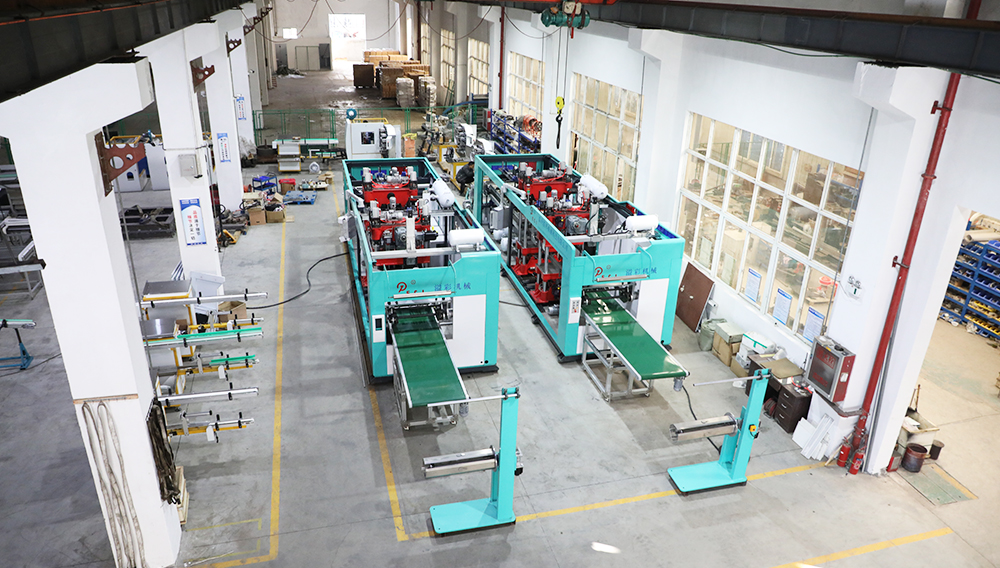
The machinery industry is a highly specialized manufacturing field characterized by its intensive reliance on advanced technical engineering. Wenzhou Yicai Machinery Technology Co., Ltd. integrates decades of research in design, automated control, and complex metallic fabrication (including CNC processing, precision welding, and robotic assembly). As globally integrated environmental guidelines become stricter, we continuously refine our technology to deliver energy-saving, highly competitive machinery.
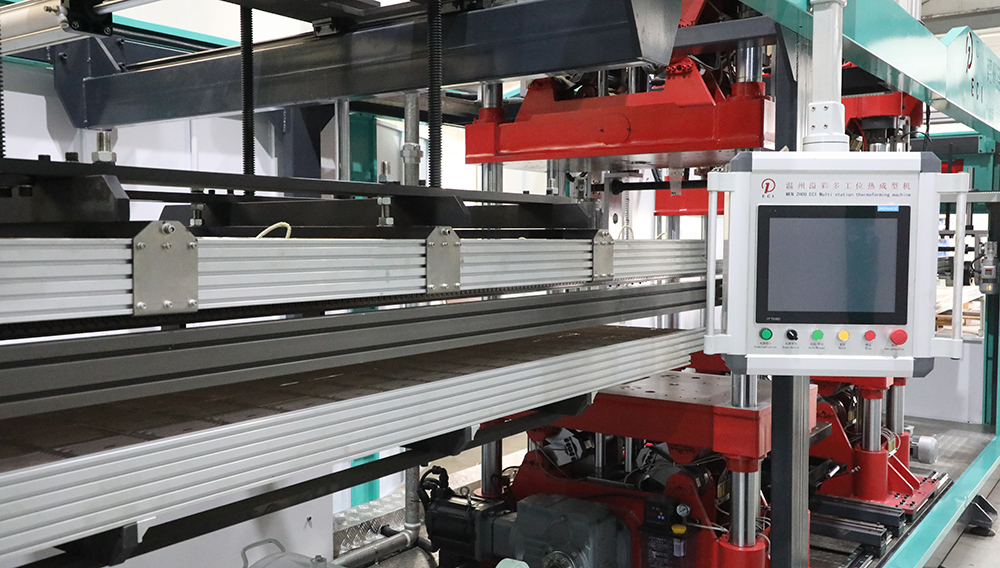
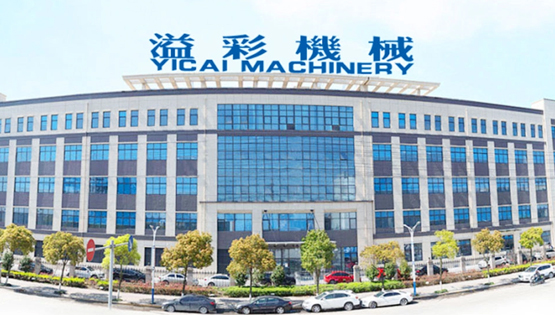
Founded in 2010 (formerly known as "Ruian Seven Star Machinery" and updated to "Wenzhou Yicai Machinery Technology Co., Ltd." in 2022), our production base in Zhejiang Province features experienced R&D teams and sophisticated automated manufacturing equipment. Our core products span thermoforming machines, curved dry offset presses, and plastic extrusion units, all engineered to meet international safety and performance criteria.
Founded & Established
Floor Space
Personnel & Specialists
USD Annual Turnover
For Tokyo businesses, sourcing printing machinery involves evaluating cost, lead times, customize-ability, and structural durability. Partnering directly with Chinese manufacturers like Wenzhou Yicai offers distinct industrial advantages:
When engineering printing lines for tapered cups, choosing between dry offset and screen printing determines your speed, resolution, and profitability:
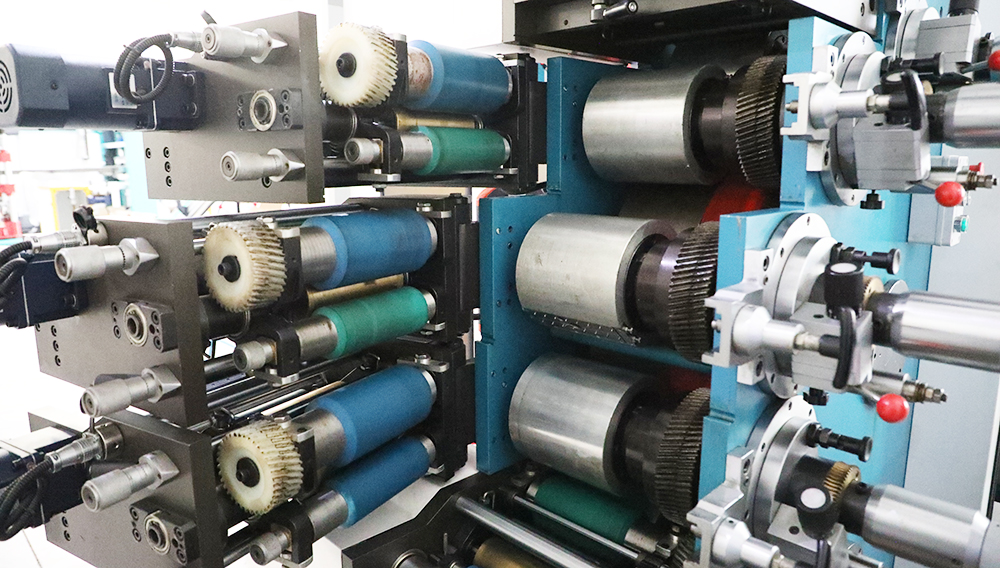
Ideal for massive runs. Uses print plates (rubber/polymer) wrapped around a central blanket cylinder. Inks from multiple plate cylinders are transferred sequentially to the blanket, then printed onto the cup in a single pass. Speeds exceed 400 cups/minute, with low unit printing costs.
Optimized for high ink deposit thickness, vivid tactile prints, and shorter, premium runs. Utilizing linear servo motors to rotate the cup and move the screen plate concurrently, it delivers unparalleled registration accuracy and deep color saturation.
Providing high-value services that ensure our global clients purchase with confidence and operate with maximum uptime.
We tailor machinery parameters based on local power grids (e.g., Japan's 200V, 50Hz/60Hz profiles), custom cup taper specifications, automated in-feed/out-feed components, and specific brand logo integration.
Providing global trading support and localized customs guidance. We ensure equipment safely passes export procedures to destinations across Japan, Southeast Asia, Europe, and the Americas.
Continuous evolution from manual operations to fully integrated automated printing. We leverage advanced AI sensors for real-time offset color correction and sheet inspection.
We work exclusively with globally recognized component brands to avoid production interruptions. Critical pneumatic and control modules are sourced from SMC, Omron, Delta, and Schneider.
Our mechanical engineering group delivers detailed production layouts, ink consumption calculations, speed optimization schemes, and cost projections prior to purchase.
Highly qualified structural engineers, controls designers, and export logistics coordinators collaborate to manage your equipment delivery flawlessly.
We supply continuous online remote PLC diagnostic configurations, quick-ship replacement parts, and local dispatch technician partnerships inside Japan.
Strict quality-control inspections govern every manufacturing step. All units are tested continuous-run under mechanical load prior to packaging and shipping.
Operating industrial manufacturing equipment within Tokyo or neighboring industrial estates like Kawasaki or Chiba demands rigorous adherence to Japanese regulatory codes. Electrical safety is paramount: industrial control panels must comply with METI (Ministry of Economy, Trade and Industry) technical requirements, and components must utilize PSE-approved safety standards where applicable. Additionally, local noise regulations dictate that printers operate under specific decibel thresholds in high-density light industrial zones.
Wenzhou Yicai bridges this regulatory gap. Our design and assembly stages utilize CE and ISO 9001 frameworks, configured directly for Japanese industrial power phases. Furthermore, we maintain strong relations with specialized field technician networks across Japan to assist during system installation, training, calibration, and local annual safety compliance checks.
The applications for disposable cup printing stretch beyond basic drink cups. Tokyo's extensive street food networks, convenience stores, and beverage cafes use our systems for printing on:
In modern cup manufacturing, traditional UV curing systems (relying on high-temperature mercury lamps) are increasingly replaced by high-efficiency UV-LED Curing Modules. UV-LED systems emit zero ozone, operate at significantly lower temperatures, and consume up to 60% less electrical power—crucial for factories operating in the Kanto region under peak-load electricity limits. Additionally, digital cameras paired with automatic color register controllers reduce setup waste to under 0.5%, maximizing material yield.
Explore our complete manufacturing ecosystem, from multi-color offset presses and screen printers to high-speed packaging lines.
Key information regarding registration accuracy, material handling, customs procedures, and regional installation in Tokyo.
Optimize your factory production line. Get a detailed technical quotation, layout design consultation, and material test plan for your cup printing project.
Send Inquiry Now Yicai Machinery