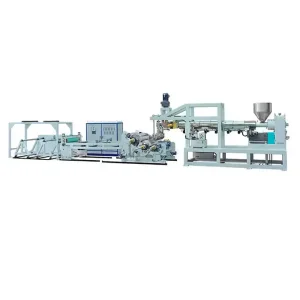
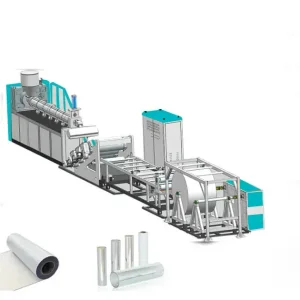
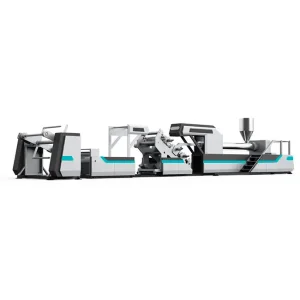
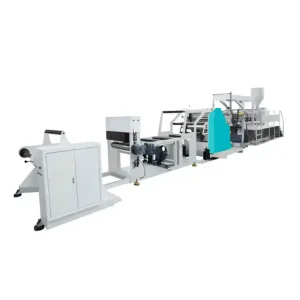
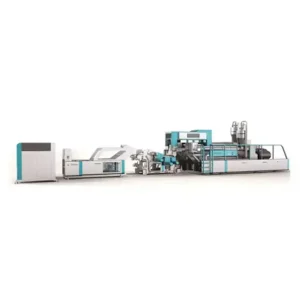
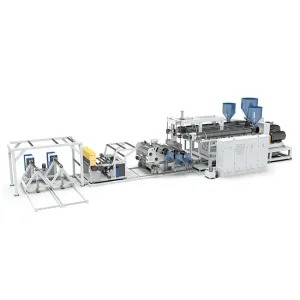
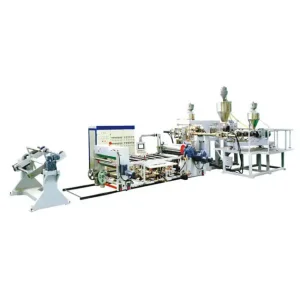
Engineered for high performance, material versatility, and exceptional thickness precision.
How Wenzhou Yicai Machinery supports the evolving demands of the American Midwest manufacturing hub.
The Chicago metropolitan area, historically known as the industrial engine of the American Midwest, remains one of the largest logistics and food packaging clusters in North America. Stretching across the O'Hare industrial corridor, down to Will County and northwest Indiana, this market represents a vast, interconnected network of food processors, consumer goods packaging firms, medical device manufacturers, and heavy-duty logistics suppliers. At the heart of this manufacturing ecosystem is the plastic extrusion process, converting raw polymers into the high-barrier sheets required for thermoformed food trays, drinking cups, blister packs, and industrial protective bins.
However, the Chicago market is currently facing a dual challenge: skyrocketing operational costs and the pressure to comply with state and federal circular economy laws. The Illinois Sustainable Technology Center (ISTC) and local clean energy initiatives mandate that plastic packaging producers significantly reduce energy consumption and integrate high percentages of Post-Consumer Recycled (PCR) materials, such as RPET and PLA, without compromising on mechanical strength or optical clarity. To succeed in this landscape, plastic sheet manufacturers must transition to advanced extrusion technology that offers highly precise thickness tolerances, multi-layer co-extrusion capabilities, and energy-saving motor configurations.
Single-layer sheet production is rapidly giving way to multi-layer co-extrusion (ABA or ABC configurations). For food packaging operations in Illinois, utilizing an ABA layer structure allows manufacturers to sandwich recycled content or cost-effective calcium carbonate fillers (CaCO3) in the middle layer (B), wrapped by virgin resins on the outer layers (A). This configuration maintains the FDA-compliant food contact safety layer while reducing raw material costs by up to 30%. Implementing these systems requires highly engineered screws designed with specific L/D (Length to Diameter) ratios to guarantee thorough melt homogenization and uniform temperature distribution, avoiding structural degradation of sensitive materials like recycled PET or bio-based PLA.
In high-speed, automated thermoforming plants around the Great Lakes, even a 5-micron variance in sheet thickness can cause localized thinning, structural failures, or machine jams. Our advanced extrusion systems incorporate precise T-Dies, automated gauge controls, and state-of-the-art melt pumps to ensure uniform thickness profiles, allowing operators to run processes at maximum speed with zero material waste.
Explore the core technical benefits built directly into every Yicai machine.
Designed for up to 5 layers, giving you full control over barrier protection, raw material cost saving, and recycled content integration.
Equipped with Siemens PLC touch-screen interfaces and real-time monitoring systems for fast, single-operator parameter tuning.
Advanced heating zones combined with copper heat-conducting elements ensure optimized melt plasticization while minimizing power bills.
Designed to scale production throughput for mid-sized processing factories to global suppliers.
Bringing together high-precision manufacturing, strategic component sourcing, and strong global logistics.
Wenzhou Yicai Machinery Technology Co., LTD. (formerly known as "Ruian Seven Star Machinery") has been at the forefront of polymer processing R&D since 2010. Located in Zhejiang Province, China's premiere coastal hub for mechanical engineering, we leverage a highly mature local supply chain to deliver performance that rivals European and North American OEMs at a fraction of the capital investment.
Our engineering team focuses heavily on the design of the extruder screw and barrel, utilizing specialized bimetallic alloys (38CrMoAlA) hardened through advanced gas nitriding processes. This guarantees that our extruders can run abrasive compounds—such as recycled polymer flakes, high-impact polystyrene (HIPS), and heavily-filled polypropylene (PP) containing mineral fillers—for years with minimal barrel wear. By maintaining strict control over steel quality, heat treatment, and precision grinding, we achieve extremely low screw clearance profiles that prevent material backflow and pressure fluctuation, guaranteeing a steady output.
To ensure high reliability for overseas buyers, especially in demanding markets like Chicago, we standardise our mechanical builds using globally recognized and locally serviceable brands:
• Control Electronics: Siemens or Schneider PLC system interfaces for seamless factory integration.
• Thermal Controllers: Omron PID controllers for precision zone heating (+/- 1°C).
• Drive Systems: ABB frequency inverters combined with high-torque gearboxes for consistent output speed.
• Hydraulic Screen Changers: Double-column quick screen changers to ensure zero downtime during filter replacements.
Our machines produce the high-performance sheets essential for diverse consumer and industrial applications.
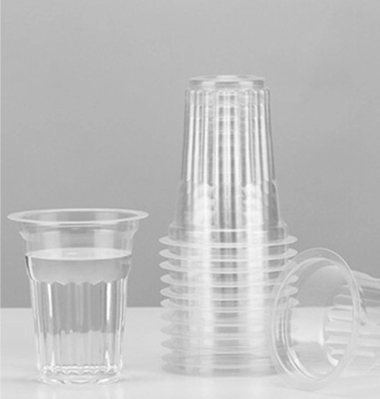
High-clarity PP, PET, and PLA sheets with optimized surface tension for clean inline thermoforming and multi-color printing.
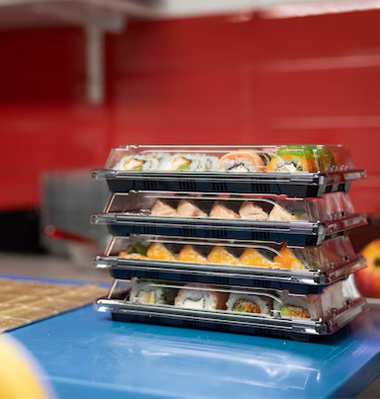
Multi-layer barrier sheets (PET/EVOH/PE) designed to prevent oxygen ingress and dramatically extend food shelf life.
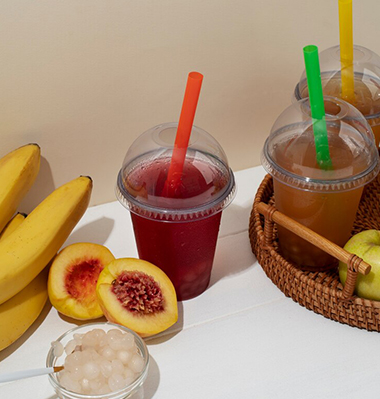
Specially formulated PET/PLA extrusion setups engineered to maintain crystal-clear transparency at high production speeds.
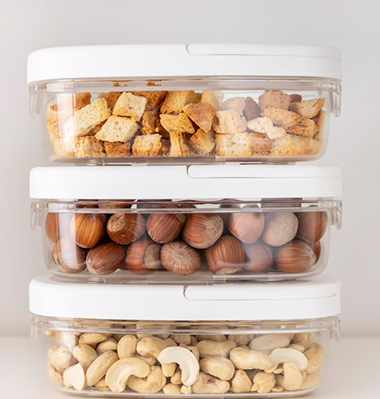
Durable, high-thickness PS and PP sheets configured to withstand rugged handling and varied climatic conditions.

Engineered for high stress crack resistance, ensuring perfect lip sealing and impact durability for home deliveries.
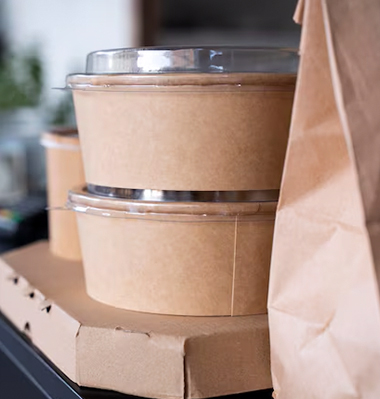
High-temperature resistant PP mineral-filled sheets engineered for structural rigidity under thermal load.
Simplifying international logistics, customs clearance, and local installation for Mid-West businesses.
Importing large-scale industrial machinery requires careful alignment with local safety and electrical regulations. For companies operating in the US Midwest, particularly within Illinois, there are several key elements to consider during the specification and procurement phase:
Industrial facilities in the Chicago area typically operate on 480V, 3-phase, 60Hz power systems. At Wenzhou Yicai Machinery, we customize our electrical cabinets and wiring schematics to comply with National Electrical Code (NEC) guidelines. All major electrical components, from circuit breakers to variable frequency drives, are selected from UL-listed product lines, ensuring hassle-free local inspections during installation.
Our logistics team handles the complex ocean and inland freight routing to Chicago. Shipments are typically booked from the Port of Ningbo or Port of Shanghai, arriving at the Port of Chicago via the St. Lawrence Seaway, or routed through the Port of Los Angeles/Long Beach with rail transport to Chicago's intermodal terminals. We supply comprehensive commercial invoices, packaging list details, bill of lading documentation, and origin certifications to facilitate fast customs clearance.
Every extrusion system is fully assembled and test-run in our factory prior to shipping. We provide detailed installation manuals, video guides, and PLC mapping files. For post-delivery setup, we offer virtual support sessions led by our engineering team, or on-site commissioning technicians to calibrate the die, feedblock, and calendar rolls. Furthermore, we maintain a complete inventory of wear-and-tear components (screws, heater bands, thermocouples) ready for immediate shipment to minimize downtime.
Important questions answered directly by our senior technical directors.
Our extrusion systems are designed with high versatility. They process a broad range of polymers, including Polypropylene (PP), Polystyrene (PS), High Impact Polystyrene (HIPS), Polyethylene (PE), Polyethylene Terephthalate (PET), and biodegradable Polylactic Acid (PLA). By customizing the screw profile and temperature control settings, we ensure optimal output regardless of material choice.
Multi-layer co-extrusion (such as ABA configuration) allows you to use cost-effective recycled material or calcium carbonate (CaCO3) fillers in the center layer (B), which can make up to 50-70% of the total sheet thickness. The outer layers (A) are made of virgin polymer, preserving the sheet's surface appearance and meeting food contact safety guidelines. This approach can lower raw material expenses by 15% to 35%.
The standard lead time for manufacturing, assembly, and in-factory calibration of our custom extrusion lines is typically 60 to 90 days. Marine transit from Chinese shipping hubs to Midwest rail yards in Chicago takes an additional 30 to 45 days. We provide regular status updates and video records throughout the production run.
Our machines feature a precision hanger-type T-die design that maintains uniform flow distribution across the sheet width. Fine-tuning is handled via manual or automatic push-pull bolts. To achieve higher precision, we can integrate closed-loop thickness scanning systems that communicate directly with the PLC to adjust die lip temperature or calendering roll pressure automatically.
Yes. We construct our equipment using industrial components sourced from global brands like Siemens, Schneider, and Omron. The system's main control cabinet can be configured to comply with UL and NEC guidelines, ensuring safe operation and straightforward installation within US manufacturing facilities.
Talk with our engineering team today to review your production outputs, material parameters, and space constraints. We offer complete turnkey solutions from raw material handling to final sheet processing.
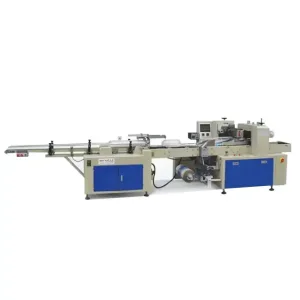
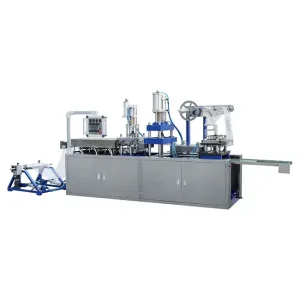
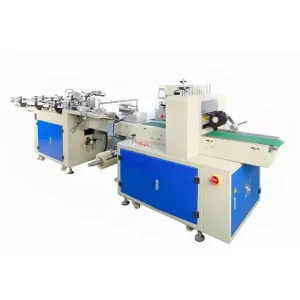
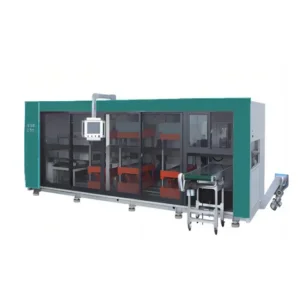
Send Inquiry NowComplete your production line with our high-speed thermoforming, cup printing, and packaging machinery.
Get professional technical support, layout engineering, and transparent pricing.
Factory Address
101, Unit 1, Building 20, Zilai Industrial Park, Wanquan Town, Pingyang County, Wenzhou City, Zhejiang Province, China
 Yicai Machinery